Friday, September 27, 2013

Talking Community


Writing Workshop

We have finished our first unit of study in writing. The unit is titled “Oral Language: Building a Talking Community.”  We begin the school year with oral language, or talking, because it is something that all children can do when they come to school.  By inviting children to tell stories about themselves and things they know and can do, we honor them for who they are.   It also helped us get to know each other!

In this unit, your child learned to:


·        Talk about things he/she knows and can do (everyday, ordinary events)

·        Use a voice loud enough for the listener to hear, and look at his/her audience when speaking

·        Listen when others tell stories

·        Think, picture, and say his/her story to him/herself and a partner


To support your child’s oral storytelling you can:


·        Tell stories  about things you know and can do (everyday, ordinary events to which your child can relate)

·        Ask your child to tell you the story he/she told at school

·        Help your child remember stories

·        Practice telling stories at home, and encourage him/her to tell these stories at school too


As your child is telling stories, say things like:


·        What is your story about?

·        Can you picture your story?

·        How will your story go?

·        What happens next?

·        Repeat your child’s story and ask if you got it right

·        Have your child repeat his/her story several times

·        Have your child tell his/her across his/her hand (On Saturday I went to the store- one finger, my mom and I got milk-next finger, etc.)


Have fun telling and listening to stories about things you and your child knows and can do!


Math Workshop


The Kinder-Kids worked very hard this week reviewing and learning about numbers.  I am so proud of them!  Their favorite activity was writing numbers on their dry erase boards to Dr. Jean’s Numeral Song.  This activity focused on number recognition and formation.   Ask your kindergartner to perform the Numeral Song for you! 


Thank You!
 
 
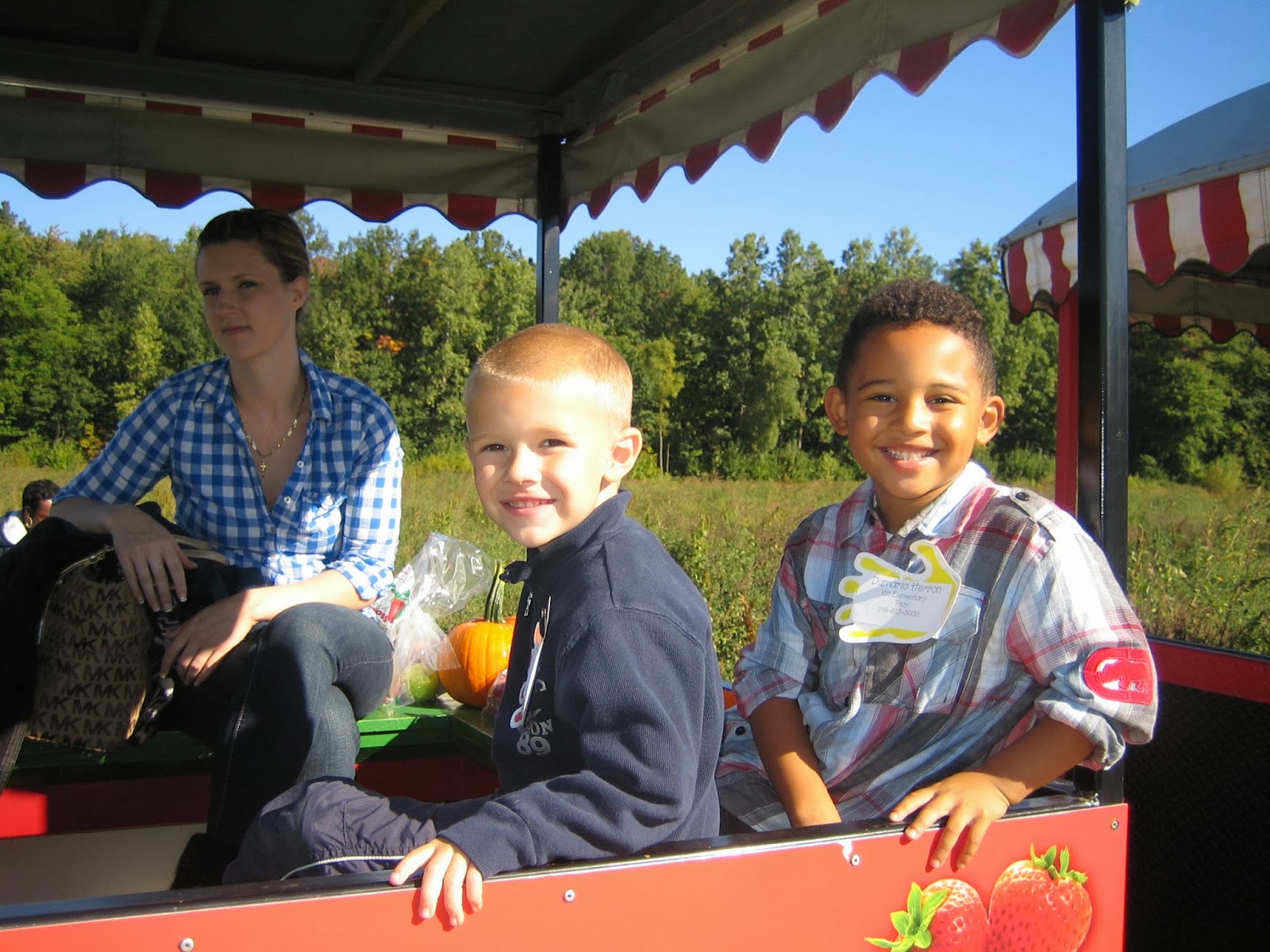
What a wonderful day at Blakes!  We had perfect weather!  Thank you to all of our chaperones. We had a fantastic time with you there to help us! 


Sunday, September 22, 2013

Exciting and Colorful Week!


Social Studies

This week we focused on friends in Social Studies.  This is one of my favorite units to teach because it is the foundation of our kindergarten program.  We discussed and acted out ways to be friends with each other.   We made ‘friend drawings’ where two friends worked together on one picture.  The children also partnered up and measured each other using connecting blocks we call unifix cubes.  (This helped us count and write numerals too!)  I really enjoyed hearing the children use manners and interact with each other.  I heard the words please and thank you many times.

This week we also discussed problem-solving skills (conflict resolution) in Friendship Circle.  We are learning how to solve our differences with our words. I encourage children to try to solve their own problems by using statements such as, “I don’t like it when you_______, please stop.”, and if it does not work, they are asked to find an adult for help.  We also encourage them to say, “When you are done with that, may I have a turn?” if they would like to use something another child has.  Ask your kindergartner to model how we solve our problems peacefully. This was an important week! 

Reading Workshop


It has been an exciting and colorful week in kindergarten.  We read many great color books including Mouse Paint and Brown Bear Brown Bear, What Do You See?  By Bill Martin, Jr.  We made our own copy of this book and called it, “Kindergarten, Kindergarten, What Do You See?”  Then we used props to act out the story.  As children learn to remember and retell stories, they are in the beginning stage of reading!  If you do not have this book at home, I highly recommend it.  Children love to read it and memorize the words.

During Shared Reading we learned a new “colorful” nursery rhyme this week – Little Boy Blue.  Kindergartners and rhymes just go together!  The children have loved chanting, singing and making up their own rhymes.  However, it is not just for fun!  Rhyming activities develop one of the most critical concepts for success in reading – phonemic awareness.

Science
We also learned about the primary colors (red, yellow and blue) and mixed them together to make secondary colors (purple, orange and green).  The kids loved working with our color paddles.


Math Workshop
In math we were busy with shapes.  We learned how many sides and corners each shape has. We created our own shapes on geo boards too.
We also graphed our favorite color and sorted buttons.  The Kinder-Kids showed off their math skills by sorting buttons by shape, size, color and button holes.
I am also really happy with how the kids are learning our routines and procedures for math workshop.  We are amazing math stars!


Wednesday, September 18, 2013

We are off and running!


We are off and running!  It has been another incredible week getting to know all of our kindergarten friends.  Each child brings a special something to our class that makes it a great place to be!  We are all getting to know each other quite well.  All the children are learning the names of their classmates and also learning something about each other on the day they are spotlighted as special Kinder-kid.  Names are such a wonderful learning tool because they are so meaningful to the children.  They love playing games with their names and with the names of their friends.  Research shows that one of the first things a child learns to read at school is a friend’s name.  Names also teach us:

§  Directionality – print goes left to right

§  The difference between and letter and word

§  Letter recognition & formation

§  Initial, middle, and ending sounds

As the children learn to read and write many of our names, they use knowledge of letters in names at later stages as part of their analysis of new words.


This week we added our names to our word wall, traced our names in “rainbow writing”, and made our names with magnetic letters.    We used magazines to cut out letters in our name.  It was great scissor practice.  We also used beans to make our names.  That was great fine motor practice.  Today we wrote our names with shaving cream (Boy – was that fun!).


Reading Workshop

Environmental print is a part of your child’s first reading experience.  It is a powerful tool for literacy.   It is the print that surrounds us.  Children first recognize it from the colors, shapes and pictures that surround it.  Then they move from shapes and colors to recognizing it without color, to then focusing on letters and words.   We did many activities with the labels you sent in this week.  Thank you for helping us create our environmental print wall.  I truly appreciate your support in helping our classroom be a rich literacy environment!

We also worked on…

§  Identifying different letter characteristics.

§  Rhyming words

§  Syllables

We read many great books this week too…

§  A is for Alice

§  Chrysanthemum

§  Andy

§  My Mommy Doesn’t Know My Name

§  Super Hero ABC

§  Chicka Chicka 123


Math Workshop

During math workshop we are learning how to work with our math bins.  We also graphed how many letters and syllables are in our name. Then we analyzed the results.   We made AB patterns, practiced making tally marks & counting by tens.


THANK YOU for returning all of the school forms.  I know there were a lot.
 
THANK YOU for sending in their red folder and checking it each day.
 
THANK YOU for the tremendous turn out for curriculum night.  It was so nice to see everyone.

Monday, September 9, 2013

Welcome!


We are off to a great start this year thanks to your wonderful children!  This is the first of many weekly newsletters that you will receive every Friday.  I hope you will find them informative about kindergarten life. 


Our main focus over the next few weeks is learning our classroom procedures, routines and expectations.  This will set the foundation for our year (and a great one at that!).  We are all working on coming into our classroom, hanging up backpacks, giving important papers to the teacher, putting our Kinder-Kid folder into our cubbies and starting our morning jobs.  We are also working on making our lunch choices and getting ready lunch.   After only four days of school, it’s amazing how well the children are learning the routine.


On our first day of school we went on a “Chester Chase” looking for Chester the Raccoon from the story The Kissing Hand.  Our chase/tour helped us get familiar with Hill.  We saw where a lot of things are. We also met many of the “helping adults” that are available to the kids, including Mrs. Shoemaker (school office), Mr. Kevin (building engineer), Mrs. Babcock (Media Tech), and Mrs. Brzezinski (our principal).    Our chase lead us right back to our room where Chester left us Kissing Hand mini books!            


We are also very busy creating artwork.  We have many talented artists in our room!  We have painted coconut trees based on the story, Chicka Chicka Boom Boom (we loved the rhyme, repetition and rhythm of the story), Clifford from the story, Clifford’s First Day of School and Kinder-Kids.   The kid’s artwork is so wonderful.  I am hanging a majority of it up in the hall & classroom so everyone can admire it!


Math Workshop

In math we have been working with pattern blocks, links, counters and unifix cubes.  This week there was free exploration with these manipulatives.  This allowed your child to use the materials in his/her own way to discover patterns, number concepts, and classification.

          We are also working on calendar skills, counting, and number recognition.

Visible Thinking  You will be hearing a lot about our visible thinking routines this year. Visible Thinking is a broad and flexible framework for enriching classroom learning .  Here are some of its key goals:

·         Deeper understanding of content

·         Greater motivation for learning

·         Development of learners' thinking and learning abilities.

Check out our visible thinking routines at curriculum night!


Monday, May 6, 2013

Hooray for May!


Math

Hooray for May!!!!!    A tremendous focus in kindergarten math all year long is counting---in many different ways! We have counted up and counted back down. Most kids are able to count by 10’s, 5’s, and 2’s, some even by 3’s. Often kindergartners begin to be able to count even when the objects they’re counting are “concealed” (I may tell a child, “Here are 4 counters. There are 3 more under this paper. How many are there all together?” or even “There are 2 counters under this paper, and 7 more under this paper. How many do I have altogether?”) This is the beginning of mental math! At this time in the year, kids should be able to think very flexibly about numbers, understanding that 5 is the same as 3+2, or 4+1.

We continue to work on “counting on”. When they are adding two sets of objects together, we are encouraging them to grab the bigger number (or put that number in their head), then begin at that number to count on to the total.  (Ex.  If they have 5 red chips and 3 yellow chips, they would grab the 5 and count on the next 3.  They would say, “5…6 – 7 – 8” to arrive at the total.)   You can play some games with your child at home that helps him/her learn and use this “counting on” skill:

  • Roll 2 dice.  Grab one number, then “count on” the number on the 2nd die, rather than counting from 1.

  • Roll one die.  Put that number of manipulatives (beans, cereal, paper clips, pennies, macaroni, etc.) under a cup.  Roll the die again and set that number of manipulatives outside the cup.  “Count on” to get the total of the two.
Counting on is a skill that allows kids to be much more efficient with their counting, and as a result, often more accurate than if they drop back to 1 and count every object.  Happy Counting!!!!


Writing Workshop

We concluded our unit on “How To” books this week.  Your child brought home all their writing pieces.  Hopefully, you had a chance to look at them with your child.  We are now beginning our unit on informational writing.  This week we have read a lot of informational books on animals, insects, vehicles, & seasons.   Throughout this unit, our writers will be encouraged to write a variety of books on areas of personal expertise. This will provide them repeated opportunities to practice how to generate ideas and plan the organization of information.


Reading Workshop

 Storyteller Voice

We have been practicing using our storyteller voice in during reading workshop. We are giving the characters personalities by using different voices for different characters.  We are also making our voices go “up” when we see a question mark and read with excitement when we see an exclamation point. 

Word Study

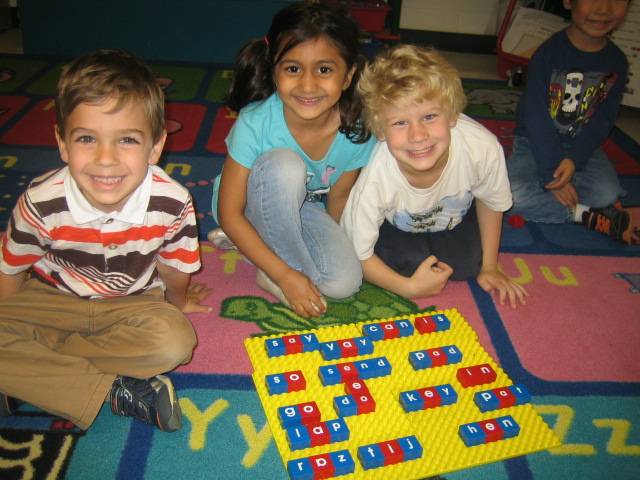
Check out all the fun we had learning during word study this week!


Science

Even though we have concluded our science unit, the learning certainly hasn’t stopped! The little scientists are having a ball finding worms and bugs on our playground!


Sunday, April 28, 2013

Worms Galore!


Science

This week we have had fun exploring and learning about our new classroom visitors - earthworms and red worms!  We had many opportunities for guided explorations and free learning time.  It has been very fun handling the little critters and observing their structure and behavior.  We also compared earthworms to red worms and looked at their many similarities and differences.   It has tied in nicely with our non-fiction reading and writing workshop.  We read lots of non-fiction books this week that taught us some interesting facts about worms.

We concluded our week with a visible thinking routine called, I used to think, now I think…Here is a list of the fun facts we came up with this week as we explored & learned about worms:

·         Worms lay eggs

·         Worms have segments on their bodies

·         Worms live in damp, dark places

·         Worms do not have teeth, eyes, arms or legs

·         Worms do have a mouth

·         Worms do have a head and tail

·         Worms move by stretching their bodies

·         Worms eat dirt, leaves, oats and paper

·         Worms are great for our garden

·         Worms make tunnels

·         Worms come out then it rains to get wet.


Reading and Writing Workshop
Hooray for Earth Day!
Reading and writing workshop revolved around Earth Day this week.  The kindergartners continue to explore the features of nonfiction and identifying what they can learn from non-fiction books.  They have also been using our comprehension strategies like MAKING CONNECTIONS to information the students already know, WONDERING about topics they read about and RETELLING.
We celebrated Earth Day by talking, reading and writing about ways we can take care of our planet.  We started our week with a visible thinking routine called, See, Think, Wonder, about a picture of a polluted lake.  We had many conversations about caring for our Earth and things we can do to keep our planet nice for everyone. The children learned the importance of clean water, clean air, and planting new trees.
 
We also talked extensively about recycling... what it means to recycle, what happens to garbage after we throw it away, what happens to our recyclables after they are picked up.... SO much discussion and SO many questions from those inquisitive little kindergartners!


Math
We continued our Earth Day theme during math centers.  We also spent time on number formation.  It continues to be a focus in kindergarten.  Please remind your child to start their numbers at the top and take their time.


Thank you TFEE for our classroom grant...BLOCK PLAY IS IMPORTANT!